
What Is Ghost Pairing on WhatsApp? Scam Tactics, Warning Signs, and Safety Tips
Ghost Pairing on WhatsApp is one of the latest and most dangerous threats targeting users of the world’s most widely used messaging platform.
While WhatsApp connects billions globally for personal, professional, and commercial communication and offers strong security features, scammers exploit human behaviour rather than technical vulnerabilities to secretly access and control accounts.
In this guide, we provide a complete overview of Ghost Pairing, including how it works, scam tactics, warning signs, practical safety tips, and steps to recover your account if compromised.
Whether you are an individual or managing a business WhatsApp account, this guide is essential to protect your messages, contacts, and sensitive information.
What Is Ghost Pairing on WhatsApp?
Ghost Pairing is a form of account takeover where a scammer links your WhatsApp account to another device — usually via WhatsApp Web or the desktop app — without your knowledge or consent. Once paired, the scammer can:
- Read all messages in real time
- Send messages impersonating you
- Scam your contacts
- Access shared media, files, and sensitive information
The “ghost” in Ghost Pairing comes from the fact that your WhatsApp continues to function normally on your phone, making the intrusion invisible until damage is done.
How Ghost Pairing Works: Step by Step
Ghost Pairing relies on social engineering, not hacking. Scammers manipulate trust and urgency to trick users into unknowingly granting access.
Here’s how a typical Ghost Pairing scam unfolds:
Step 1: Initial Contact
The scammer initiates contact through:
- Direct WhatsApp messages
- Impersonation of friends, family, or colleagues
- Fake WhatsApp support messages claiming account issues
- Promises of rewards, prizes, or business opportunities
Step 2: Establishing Trust or Urgency
Messages are crafted to prompt immediate action:
- “Your WhatsApp account is at risk, verify now”
- “You must confirm this code to continue using WhatsApp”
- “Help me verify my account urgently”
Step 3: Code Sharing or QR Code Scanning
This is the critical moment. Scammers trick you into:
- Sharing the 6-digit verification code sent to your number
- Scanning a QR code they provide, which links your account to their device
Once completed, the scammer gains access to your chats and can operate invisibly.
Step 4: Hidden Control
The scammer can now:
- Read all incoming and outgoing messages
- Send messages posing as you to scam contacts
- Access media files and shared documents
- Remain undetected as notifications remain normal
Common Ghost Pairing Scam Tactics
Scammers are creative and constantly evolve their tactics. Common Ghost Pairing methods include:
#1. Fake WhatsApp Support Messages
Messages may claim urgent action is needed to prevent suspension or security issues. Example:
“Your WhatsApp account will be deactivated today. Please verify your account using the code we sent.”
⚠ Reality: WhatsApp never requests verification codes via chat.
#2. Impersonation of Friends or Family
A scammer pretends to be someone you trust, claiming:
“Hi, I changed my number. Can you send me the verification code I received?”
This exploits trust and urgency, making victims more likely to comply.
#3. Job or Business Verification Scams
Some scams use the promise of employment, rewards, or payments to prompt code sharing or QR scanning. Example:
“You are eligible for a bonus. Scan this QR code to claim it.”
⚠ Reality: Any QR code shared externally can link your account to a scammer.
#4. QR Code Traps
Scammers may send QR codes disguised as:
- Account verification
- Security checks
- Business setup instructions
Scanning these codes can silently pair your account with the scammer’s device.
Warning Signs of Ghost Pairing
Recognising early signs can prevent major damage. Key warning signs include:
- Unknown Linked Devices: Check your WhatsApp settings for unfamiliar devices.
- Read Messages You Didn’t Open: Scammers may read messages silently.
- Friends Reporting Suspicious Messages: Messages sent from your account that you didn’t send.
- Security Alerts: Notifications about new logins or device pairing you didn’t initiate.
How to Check for Ghost Pairing
WhatsApp provides a way to monitor linked devices:
- Open WhatsApp
- Go to Settings
- Select Linked Devices
- Review all active sessions
If you spot a device you don’t recognise, it’s a clear indicator of Ghost Pairing.
Steps to Recover Your Account
If you suspect Ghost Pairing:
- Log Out from All Devices: Tap “Log out from all devices” in Linked Devices.
- Enable Two-Step Verification: Add a strong PIN to prevent re-pairing.
- Secure Your Phone and SIM: Lock your SIM card and phone with PIN/password.
- Notify Contacts: Alert your contacts about the scam to prevent them from being targeted.
- Report to WhatsApp: Use WhatsApp support to report suspicious activity.
Safety Tips to Prevent Ghost Pairing
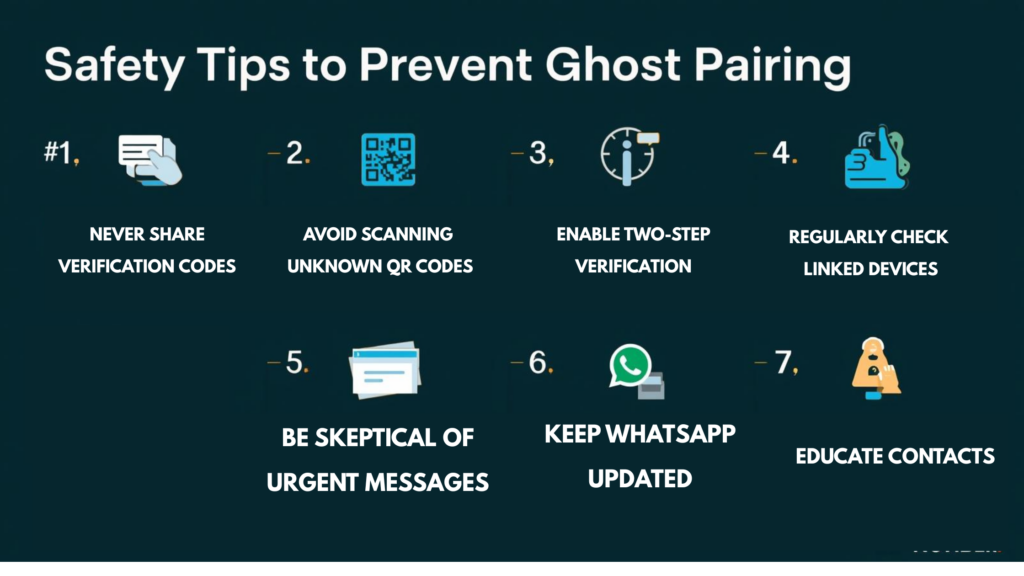
Proactive safety is always better than reactive recovery. Follow these steps:
#1. Never Share Verification Codes
Verification codes are private. Sharing them with anyone — even someone claiming to be WhatsApp — is dangerous.
#2. Avoid Scanning Unknown QR Codes
Only scan QR codes you initiate, such as linking your phone to your own desktop or web session.
#3. Enable Two-Step Verification
A PIN adds an extra security layer, preventing unauthorized access even if someone gets your code.
#4. Regularly Check Linked Devices
Habitually review linked devices to detect unauthorized access early.
#5. Be Skeptical of Urgent Messages
Scammers rely on panic. Take time to verify any urgent message before taking action.
#6. Keep WhatsApp Updated
Updates often contain security patches, scam protection, and improved account safety measures.
#7. Educate Contacts
Inform family and colleagues about Ghost Pairing scams so they don’t become victims through your account.
Why Awareness Matters
Ghost Pairing is not a technical hack — it’s social engineering. Your vigilance, awareness, and careful actions are your strongest defence. Being informed allows you to act before damage occurs, protecting your privacy, finances, and personal relationships.
Conclusion
Ghost Pairing is a hidden and sophisticated WhatsApp scam that can silently compromise your account and contacts.
The good news is that it can be prevented and mitigated by staying alert, checking linked devices regularly, and never sharing verification codes or scanning unknown QR codes.
Following the steps in this guide, you can safeguard your WhatsApp account, protect your personal information, and prevent scammers from exploiting your trust.
Stay vigilant. Stay secure. Protect your WhatsApp account from Ghost Pairing and other emerging scams.
