
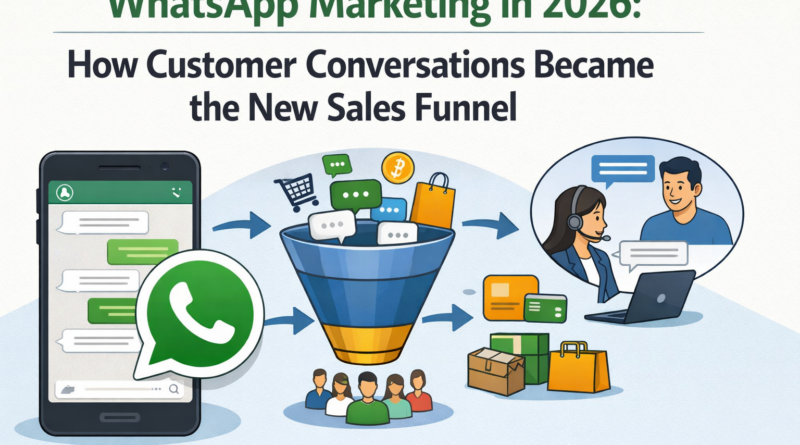
WhatsApp Marketing in 2026: How Customer Conversations Became the New Sales Funnel
WhatsApp marketing in 2026 no longer looks like traditional digital marketing.
Landing pages, long email sequences, and complex funnels are steadily giving way to something far more human: real-time customer conversations.
Today, the most successful brands are not pushing people through rigid funnels; they are guiding them through personalised chats.
In this new era, conversation itself has become the sales funnel.
The Death of the Traditional Sales Funnel
For years, digital marketing followed a predictable path:
traffic → landing page → email nurture → sales call → conversion.
In 2026, this approach feels slow, impersonal, and disconnected from how consumers actually behave. Modern customers want:
- Instant responses
- Personal attention
- Simple buying processes
- Human interaction
They do not want to fill forms, wait for emails, or jump between platforms. They want answers now, and WhatsApp delivers exactly that.
Why WhatsApp Dominates Customer Communication in 2026
WhatsApp has evolved from a messaging app into a full customer engagement platform. Its dominance comes from three key advantages.
#1. Conversation Is Native, Not Forced
Unlike websites or email tools, WhatsApp is built for conversation. Customers already use it daily to talk to friends and family, so interacting with a business feels natural rather than transactional.
#2. Speed Shapes Buying Decisions
In 2026, speed is currency. Brands that respond within minutes win attention, trust, and sales.
WhatsApp enables instant replies, automated flows, and seamless handovers between bots and humans.
#3. Trust Lives in the Inbox
Scams and spam have reduced trust in emails and ads. WhatsApp conversations, especially from verified business profiles, feel safer and more credible. Trust accelerates conversion.
Conversations as the New Sales Funnel
The modern WhatsApp sales funnel does not look like a funnel at all. It looks like a guided conversation.
Stage 1: Entry Through Intent
Customers enter the conversation through:
- Click-to-WhatsApp ads
- Website chat buttons
- QR codes
- Social media links
Unlike cold traffic, these users already have intent. The conversation begins at the point of interest, not awareness.
Stage 2: Qualification Through Chat
Instead of forms and surveys, qualification happens naturally:
- Asking what the customer needs
- Understanding budget and urgency
- Recommending relevant options
This feels helpful, not intrusive, and builds immediate rapport.
Stage 3: Personalised Value Delivery
In 2026, generic pitches do not convert. WhatsApp marketing allows brands to send:
- Tailored product recommendations
- Images, videos, and voice notes
- Clear pricing and benefits
Each message adapts to the customer’s responses, making the journey feel personal.
Stage 4: Frictionless Conversion
Conversion no longer requires multiple steps. Sales happen inside the conversation with:
- Simple payment instructions
- Direct checkout links
- Confirmation messages
The fewer the steps, the higher the conversion rate.
Stage 5: Retention Through Ongoing Conversations
Unlike traditional funnels that end at the sale, WhatsApp conversations continue:
- Order updates
- After-sales support
- Loyalty rewards
- Exclusive offers
This turns one-time buyers into long-term customers.
Automation Powers Scale, Not Distance
One major shift in 2026 is how automation is used. Automation no longer replaces humans; it supports them.
Smart WhatsApp automation handles:
- Greetings and onboarding
- Frequently asked questions
- Lead routing and segmentation
Human agents step in when emotional intelligence or complex decisions are needed. The result is scale without losing authenticity.
Why B2C Brands Are Winning Faster on WhatsApp
B2C businesses benefit the most from conversation-based funnels because:
- Buying decisions are emotional and fast
- Customers expect instant interaction
- Personal attention increases trust
From retail and food services to digital products and logistics, WhatsApp marketing has become the shortest path between interest and purchase.
Data, Context, and Timing Replace Guesswork
In 2026, WhatsApp marketing is not about blasting messages. It is about context.
Brands track:
- Response times
- Conversation drop-off points
- Repeat engagement
- Purchase history
This data allows businesses to send the right message, to the right person, at the right time.
Common Mistakes Brands Still Make
Despite its power, some businesses still misuse WhatsApp by:
- Sending messages without consent
- Over-automating conversations
- Treating WhatsApp like email
- Ignoring follow-ups
Successful brands respect the conversational nature of the platform.
The Role of ChatreachMagnet in the New Funnel
Managing thousands of conversations manually is impossible. This is where platforms like ChatreachMagnet come in.
ChatreachMagnet helps brands:
- Organise and scale WhatsApp conversations
- Automate intelligently without losing human touch
- Segment audiences for relevant messaging
- Turn chats into measurable sales outcomes
In 2026, winning brands are not those with the biggest ad budgets, but those with the best conversations.
Conclusion
WhatsApp marketing in 2026 is no longer about campaigns. It is about relationships. Customer conversations have replaced traditional sales funnels because they are faster, more personal, and more effective.
Brands that understand this shift are not chasing customers across platforms. They are meeting them where they already are, listening first, and selling naturally through conversation.
At ChatreachMagnet, we believe the future of sales is conversational. And on WhatsApp, that future is already here.
