
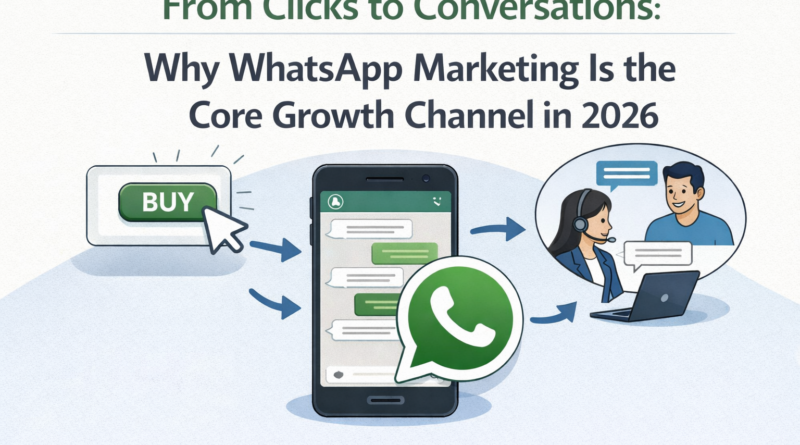
From Clicks to Conversations: Why WhatsApp Marketing Is the Core Growth Channel in 2026
WhatsApp marketing in 2026 is no longer about pushing promotions or chasing clicks across multiple platforms.
It has become the foundation of how modern businesses communicate, build trust, and drive sustainable growth. As digital behaviour continues to evolve, customers now expect real conversations instead of one-way advertising.
The era of clicks, impressions, and passive engagement is fading fast. In its place, conversation-led marketing is taking over, and WhatsApp marketing sits firmly at the centre of this shift.
With billions of active users, unmatched message open rates, and a communication style people already trust, WhatsApp has evolved from a simple messaging app into the most powerful growth channel for businesses in 2026.
Today, brands are not asking how to get more traffic. They are asking how to start better conversations, convert faster, and retain customers longer.
This is exactly why WhatsApp has moved from being a support tool to becoming the core growth channel in 2026.
The Shift from Click-Based Marketing to Conversation-Based Growth
For years, digital marketing revolved around clicks. Advertisers optimized for traffic, landing page visits, and conversion rates. While these metrics still matter, they no longer tell the full story.
Modern customers behave differently.
They want:
- Immediate responses
- Personalised communication
- Real human interaction
- Trust before purchase
A click does not guarantee any of these. A conversation does.
WhatsApp marketing enables brands to move beyond one-way promotion into two-way communication. Instead of pushing messages, businesses now engage customers in real-time discussions that feel natural and human.
This shift has redefined growth marketing in 2026.
Why WhatsApp Outperforms Traditional Marketing Channels
WhatsApp did not become the core growth channel by accident. It earned that position by consistently outperforming email, SMS, and social media in key areas that matter to businesses.
#1. Unmatched Message Open Rates
Email open rates continue to decline, often sitting below 25 percent. WhatsApp messages, on the other hand, regularly achieve open rates above 90 percent.
This means:
- Your message is seen
- Your offer is noticed
- Your brand stays top of mind
In 2026, visibility is currency, and WhatsApp delivers it reliably.
#2. Real-Time Engagement Instead of Delayed Responses
Traditional marketing channels are slow. Emails sit unopened. Social media messages get buried. Support tickets take hours or days.
WhatsApp changes this dynamic.
Customers expect instant replies, and businesses that deliver fast, helpful responses gain trust quickly. Real-time engagement shortens decision cycles and increases conversion speed.
In competitive markets, speed is a growth advantage.
#3. Conversations Build Trust Faster Than Campaigns
People trust people, not ads.
A WhatsApp chat feels personal, familiar, and safe. Customers can ask questions, raise concerns, and receive tailored answers without pressure.
This conversational environment removes friction from the buying process and turns sceptical prospects into confident buyers.
WhatsApp as the New Sales Funnel in 2026
The traditional sales funnel is linear: awareness, interest, consideration, conversion. WhatsApp replaces this rigid structure with something more flexible and human.
In 2026, the WhatsApp funnel looks like this:
- Entry point (Click-to-WhatsApp ads, website chat, QR codes)
- Conversation
- Personalised value exchange
- Purchase
- Ongoing relationship
Every stage happens inside the same chat thread.
This is why WhatsApp is not just a channel. It is an ecosystem.
How Businesses Use WhatsApp to Drive Sustainable Growth
Successful brands do not use WhatsApp marketing randomly. They follow strategic patterns that turn conversations into measurable growth.
1. Click-to-WhatsApp Advertising as a Growth Engine
Instead of sending traffic to landing pages, businesses now send users directly into WhatsApp conversations.
This approach:
- Reduces drop-offs
- Captures intent instantly
- Allows immediate qualification of leads
A single conversation can achieve what multiple pages and emails once did.
2. Automated Conversations Without Losing the Human Touch
Automation has matured significantly by 2026. WhatsApp chatbots now handle:
- FAQs
- Lead qualification
- Product recommendations
- Appointment scheduling
The key difference is balance.
Smart businesses combine automation with human handover. Bots handle routine tasks, while real agents step in when conversations require empathy or persuasion.
This hybrid approach scales growth without sacrificing experience.
3. Personalisation at Scale
WhatsApp allows brands to segment audiences based on behaviour, preferences, and past interactions.
This enables:
- Targeted broadcasts
- Context-aware follow-ups
- Personalised offers
When customers feel understood, they engage more and churn less.
Personalisation is no longer optional. It is expected.
WhatsApp vs Other Growth Channels in 2026
To understand WhatsApp’s dominance, it helps to compare it with other popular channels.
Email Marketing
Email still works, but it feels formal and slow. Inboxes are crowded, and trust is low.
WhatsApp feels direct and personal, making it more suitable for modern engagement.
Social Media Marketing
Social platforms are excellent for discovery but weak for conversion. Algorithms limit reach, and conversations often move off-platform anyway.
WhatsApp completes the journey by turning interest into action.
SMS Marketing
SMS lacks richness, interactivity, and trust. WhatsApp marketing supports media, voice notes, documents, and secure messaging, making it far superior.
Why Customers Prefer WhatsApp Communication
Growth channels succeed only when customers accept them. WhatsApp works because people already use it daily.
Customers prefer WhatsApp because:
- It feels private and secure
- It does not require learning new platforms
- It allows easy back-and-forth communication
- It works even on low bandwidth
In emerging markets and developed economies alike, WhatsApp has become the default communication tool.
WhatsApp as a Retention and Loyalty Channel
Acquiring customers is expensive. Retaining them is profitable.
WhatsApp excels at:
- Post-purchase follow-ups
- Customer support
- Loyalty updates
- Exclusive offers
A satisfied customer who stays connected via WhatsApp is more likely to repurchase, refer others, and advocate for your brand.
Growth in 2026 is not just about acquisition. It is about lifetime value.
Data, Insights, and Performance Tracking on WhatsApp
Modern WhatsApp marketing platforms provide deep insights into:
- Message delivery and read rates
- Conversation outcomes
- Response times
- Conversion tracking
This data allows businesses to optimise conversations just like they once optimised ads.
In 2026, conversations are measurable assets.
Industries Winning with WhatsApp in 2026
WhatsApp is no longer limited to customer support. It drives growth across multiple industries:
- E-commerce brands closing sales via chat
- Financial services onboarding customers securely
- Real estate firms qualifying buyers instantly
- Educational institutions managing admissions
- Healthcare providers handling appointments and follow-ups
If your industry relies on trust and communication, WhatsApp fits naturally.
Common Mistakes Businesses Still Make on WhatsApp
Despite its power, many brands misuse WhatsApp.
Common mistakes include:
- Sending spammy broadcasts
- Ignoring response time expectations
- Over-automating conversations
- Treating WhatsApp like email
Growth comes from respect, relevance, and responsiveness.
The Future of Growth Is Conversational
In 2026, growth is no longer driven by how many people click your ads. It is driven by how well you communicate once they do.
WhatsApp has become the core growth channel because it aligns perfectly with modern customer behaviour. It is fast, personal, trusted, and scalable.
Brands that embrace conversation-led marketing are not just increasing conversions. They are building relationships that compound over time.
The question is no longer whether WhatsApp should be part of your growth strategy.
The real question is whether your business can afford not to make it central.
