

Parent-Managed WhatsApp Accounts: Key Advantages and Potential Risks You Should Know
To know what is Parent-managed WhatsApp Accounts is one thing, and knowing about its advantages and potential risks is another aspect every parent or guardian should know.
In our last blog post we explore As digital communication continues to evolve, parents are becoming more concerned about how their children interact online.
This concern has pushed platforms like WhatsApp to introduce safer, more controlled environments for younger users. One of the latest developments is the introduction of parent-managed whatsapp accounts, a feature designed specifically for pre-teens.
If you read our previous post on this topic, you already understand what this feature is and how it works.
In this follow-up article, we go deeper by exploring the key advantages and potential risks you should know before embracing parent-managed WhatsApp accounts.
Knowing more about Parent-Managed WhatsApp Accounts
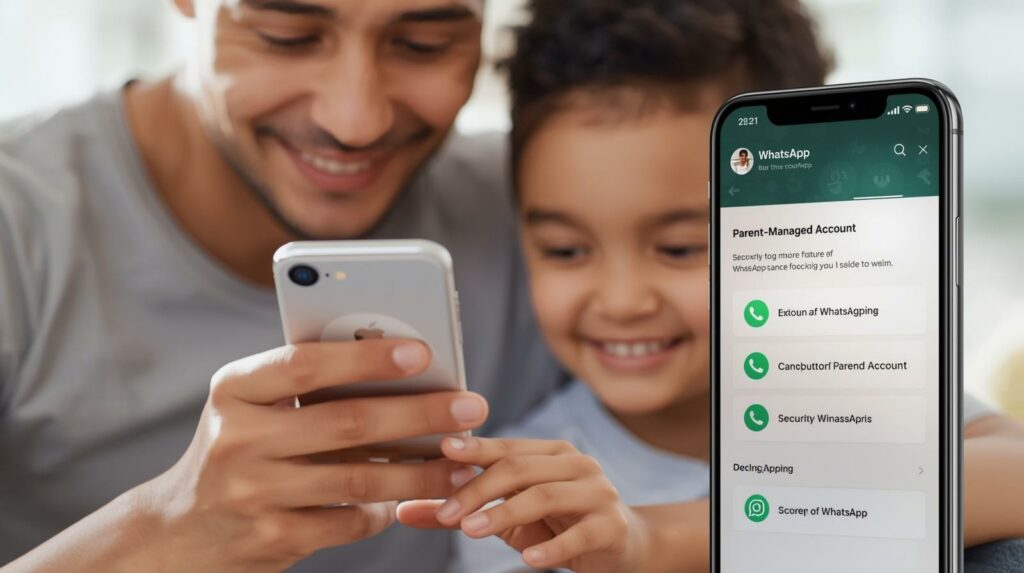
Parent-managed accounts are designed for children under the age of 13 and must be created and supervised by a parent or guardian. These accounts are linked to the parent’s device, giving them control over key settings such as contacts, group participation, and privacy preferences.
Unlike regular accounts, these are limited mainly to messaging and voice calls, with several features disabled to ensure a safer user experience.
Additionally, message requests from unknown contacts are filtered into a separate section that parents can review and approve.
Key Advantages of Parent-Managed WhatsApp Accounts
1. Enhanced Safety for Young Users
The most obvious benefit is improved safety. Parent-managed accounts come with strict default privacy settings, reducing exposure to strangers and harmful content.
Parents can:
- Control who can contact their child
- Approve or block unknown contacts
- Restrict group invitations
This ensures that children communicate only with trusted individuals, creating a safer digital environment.
2. Parental Control Without Full Intrusion
One unique aspect of this feature is the balance between supervision and privacy. While parents can control settings and monitor activity, they cannot read the actual messages due to end-to-end encryption.
This means:
- Children maintain a sense of independence
- Parents still retain oversight of interactions
This balance is crucial for building trust between parents and children in the digital age.
3. Limited Features Reduce Exposure to Risks
Unlike standard accounts, parent-managed versions disable several advanced features such as:
- Status updates
- Channels
- AI integrations
- Disappearing messages
By limiting functionality, WhatsApp reduces the chances of misuse, addiction, and exposure to inappropriate content.
4. Better Digital Parenting and Guidance

These accounts encourage active parental involvement in a child’s digital life. Parents can:
- Teach responsible communication
- Guide children on online etiquette
- Monitor behavioural patterns
This transforms WhatsApp from just a messaging tool into a learning environment for digital responsibility.
5. Controlled Introduction to Social Media
For many children, WhatsApp may be their first digital communication platform. Parent-managed accounts provide a gradual introduction rather than unrestricted access.
Instead of banning technology completely, parents can:
- Introduce communication tools step by step
- Build awareness about online safety
- Prepare children for future digital independence
6. Activity Alerts and Monitoring
Parents can receive alerts for key activities such as:
- New contact additions
- Group joins or exits
- Profile updates
This helps parents stay informed without constantly checking the child’s phone, making supervision more efficient and less intrusive.
Potential Risks and Concerns
While the feature offers many benefits, it is not without its drawbacks. Understanding these risks is essential for making informed decisions.
1. False Sense of Complete Security
One major concern is that parents may assume the platform is completely safe simply because it is “managed.”
However:
- Children can still interact with approved contacts who may not always be safe
- Risks like cyberbullying can still occur within trusted circles
No system is entirely foolproof, and parental awareness remains critical.
2. Limited Visibility into Conversations
Although end-to-end encryption protects privacy, it also means parents cannot see message content.
This creates a dilemma:
- Children are protected from over-surveillance
- But harmful conversations may go unnoticed
Parents must rely on trust, communication, and behavioural cues rather than direct monitoring.
3. Overdependence on Technology for Parenting
There is a risk that some parents may rely too heavily on these controls instead of engaging in real conversations about online safety.
Technology should support parenting—not replace it.
Effective digital parenting still requires:
- Open communication
- Regular discussions about online behaviour
- Emotional awareness
4. Potential Privacy Concerns
Even though WhatsApp maintains encryption, some critics argue that linking a child’s account to a parent’s device raises privacy questions.
For instance:
- Activity monitoring may feel intrusive to older children
- Children may struggle with autonomy as they grow
This could lead to resistance or attempts to bypass controls.
5. Limited Features May Frustrate Users
Children using parent-managed accounts may feel restricted compared to their peers using full-featured accounts.
This can result in:
- Frustration or dissatisfaction
- Pressure to switch to unrestricted platforms
- Attempts to create alternative accounts
Parents need to manage expectations and explain the reasons behind these restrictions.
6. Transition Challenges to Regular Accounts
As children grow older, they will eventually transition to standard WhatsApp accounts.
This transition can be challenging because:
- They suddenly gain access to unrestricted features
- They may not be fully prepared for increased exposure
Without proper guidance, this shift could lead to misuse or poor digital habits.
How to Maximise the Benefits and Minimise the Risks
To make the most of parent-managed WhatsApp accounts, parents should adopt a balanced approach.
1. Combine Technology with Communication
Do not rely solely on controls. Talk to your child regularly about online safety and behaviour.
2. Set Clear Digital Boundaries
Establish rules around usage, contacts, and screen time.
3. Educate, Do Not Just Restrict
Explain why certain features are limited instead of simply enforcing restrictions.
4. Monitor Behaviour, Not Just Settings
Look for changes in mood, behaviour, or communication patterns that may signal issues.
5. Prepare for Independence
Gradually reduce restrictions as your child grows and becomes more responsible.
Conclusion
Parent-managed WhatsApp accounts represent a significant step forward in creating safer digital environments for children. By combining parental control with privacy protection, WhatsApp is attempting to strike a delicate balance between safety and independence.
However, like any technological solution, it is not perfect. While it reduces risks, it does not eliminate them entirely. The real power lies in how parents use this tool—as a support system rather than a complete solution.
Ultimately, the goal is not just to protect children online but to equip them with the knowledge and confidence to navigate the digital world responsibly.
