
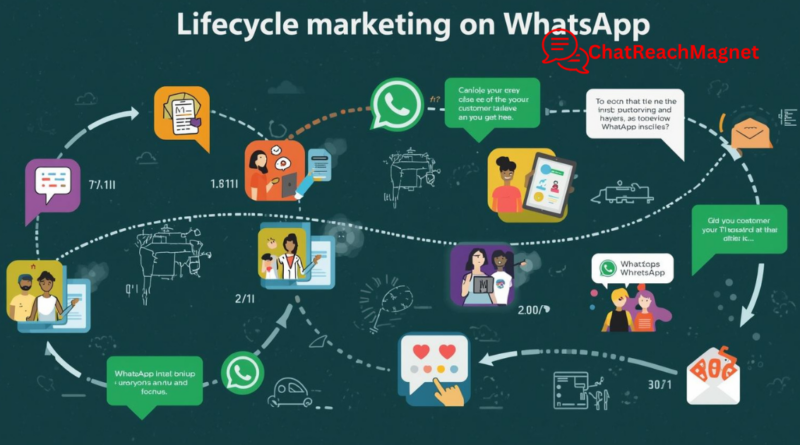
Lifecycle Marketing on WhatsApp: From Welcome Flows to Loyalty Messages
Lifecycle Marketing on WhatsApp is the strategy smart businesses use to turn one-time buyers into long-term loyal customers. Most brands focus heavily on acquiring new leads, but sustainable growth does not come from acquisition alone.
It comes from guiding customers through a structured journey — from their first interaction with your business to repeat purchases and lasting loyalty.
By using Lifecycle Marketing on WhatsApp, you ensure that every message aligns with where your customer is in their journey. From welcome flows to nurturing messages and loyalty rewards, each stage has a clear purpose.
In this guide, you will learn how lifecycle marketing works on WhatsApp and how to build high-converting flows that increase retention, engagement, and revenue.
What Is Lifecycle Marketing on WhatsApp?
Lifecycle marketing is the strategy of sending targeted messages based on a customer’s stage in their relationship with your business.
Rather than one-size-fits-all communication, you send:
- Welcome messages to new leads
- Nurturing content to interested prospects
- Conversion offers to ready buyers
- Retention messages to existing customers
- Loyalty rewards to repeat buyers
With tools like the WhatsApp Business Platform, businesses can automate and personalise these stages at scale.
The goal is simple: deliver the right message at the right time.
The 6 Stages of Lifecycle Marketing on WhatsApp
Let us break down the customer journey into practical WhatsApp campaigns you can implement immediately.
#1. Awareness Stage: The First Interaction
Goal: Capture attention and start a conversation.
At this stage, users may have clicked a social media ad, filled out a form, or joined your WhatsApp list.
Your job is not to sell immediately. Your job is to welcome and orient them.
What to Send:
- Warm greeting
- Brief brand introduction
- Clear benefit statement
- What they can expect next
Example:
“Hi David 👋 Welcome to [Brand Name]. We help businesses grow their online sales using WhatsApp marketing. Over the next few days, we will share practical tips and exclusive offers.”
This sets expectations and builds trust.
#2. Consideration Stage: Nurture and Educate
Goal: Build confidence and remove objections.
At this stage, the customer is interested but not fully convinced.
Use WhatsApp to provide:
- Educational tips
- Case studies
- Testimonials
- FAQs
- Product demonstrations
Short, valuable messages work best.
For example:
“Many of our clients increased their response rate by 40% after implementing automated welcome flows. Would you like to see how it works?”
When you educate instead of pushing, trust increases.
#3. Conversion Stage: Turn Interest into Sales
Goal: Encourage purchase.
Now the lead is warm. They understand your offer. It is time to present a clear call-to-action.
Effective conversion messages include:
- Limited-time offers
- Bonuses
- Free trials
- Payment links
- Urgency triggers
Example:
“Our WhatsApp Automation Package is 20% off today only. Would you like the checkout link?”
Keep it direct. Make the next step simple.
The fewer clicks required, the higher your conversion rate.
#4. Onboarding Stage: Deliver Value Immediately
Goal: Ensure customer satisfaction after purchase.
Many businesses stop messaging after a sale. That is a mistake.
Onboarding messages should:
- Thank the customer
- Confirm purchase details
- Provide instructions
- Offer support
Example:
“Thank you for your purchase! Here is your access link. If you need help getting started, just reply HELP.”
A smooth onboarding experience reduces refunds and increases positive reviews.
#5. Retention Stage: Encourage Repeat Purchases
Goal: Increase customer lifetime value.
Retention is cheaper than acquisition.
On WhatsApp, you can send:
- Refill reminders
- Cross-sell suggestions
- Exclusive discounts
- Content updates
If someone bought a product 30 days ago, send a restock reminder.
If they purchased a basic service, offer an upgrade.
Personalisation is key here. Reference their previous purchase to make the message relevant.
#6. Loyalty Stage: Turn Customers into Advocates
Goal: Strengthen emotional connection and encourage referrals.
Loyal customers are your most valuable asset.
Reward them with:
- Early access to new products
- Private discounts
- Loyalty points
- Referral bonuses
Example:
“You have been one of our most consistent customers. We would like to give you 24-hour early access before our next launch.”
People stay loyal when they feel valued.
How to Structure Effective WhatsApp Lifecycle Flows
Lifecycle marketing is not random messaging. It is structured communication.
Here is how to make it effective.
#1. Use Automation Wisely
Automation ensures timely delivery of messages.
You can automate:
- Welcome sequences
- Abandoned cart reminders
- Post-purchase follow-ups
- Birthday offers
- Re-engagement campaigns
However, automation must still feel human. Keep messages conversational.
#2. Segment Your Audience
Not every customer moves at the same speed.
Segment by:
- Purchase behaviour
- Engagement level
- Product interest
- Location
- Spending habits
Segmentation ensures your lifecycle messages stay relevant.
#3. Maintain Conversational Tone
WhatsApp is personal.
Avoid corporate language. Use short, clear sentences.
Instead of:
“Kindly be informed that your subscription is due for renewal.”
Say:
“Your subscription ends tomorrow. Would you like us to renew it for you?”
Simple language improves responses.
#4. Measure and Optimise
Track:
- Response rate
- Conversion rate
- Repeat purchase rate
- Revenue per customer
Identify which lifecycle stage needs improvement.
For example:
- Low onboarding satisfaction may indicate unclear instructions.
- Low repeat purchase rate may mean poor retention messaging.
Optimisation increases ROI.
Common Mistakes in WhatsApp Lifecycle Marketing
Even good strategies fail with poor execution.
Mistake 1: Selling Too Early
Do not push offers before building trust.
Mistake 2: Ignoring Existing Customers
Many businesses focus only on new leads. Your current customers are more profitable.
Mistake 3: Over-Messaging
Too many messages lead to blocks. Respect frequency.
Mistake 4: No Clear Flow
Random broadcasts are not lifecycle marketing. Plan each stage carefully.
Why Lifecycle Marketing on WhatsApp Drives Higher ROI
Here is the simple truth:
Acquiring new customers is expensive.
Retaining customers is profitable.
Lifecycle marketing works because it:
- Increases first-time conversions
- Reduces churn
- Encourages repeat purchases
- Strengthens loyalty
- Maximises customer lifetime value
When every stage is intentional, revenue becomes predictable.
Instead of hoping for random sales, you build a structured journey that guides customers from curiosity to commitment.
Conclusion
Lifecycle Marketing on WhatsApp is not about sending more messages. It is about sending smarter messages.
From welcome flows to loyalty rewards, each stage plays a role in strengthening customer relationships and increasing revenue.
If you design your WhatsApp communication around the customer journey — attracting, nurturing, converting, onboarding, retaining, and rewarding — you transform simple chats into long-term business growth.
In today’s competitive market, the brands that win are not the ones with the loudest ads.
They are the ones with the strongest relationships.
And WhatsApp is one of the most powerful tools to build them.
